USDT TRC20 and USDT ERC20 are common labels in crypto payment menus, but a label is only useful when both sides of a transfer mean the same thing. Before comparing a casino’s fees, identify the exact blockchain supported by its receiving account. A token ticker, a familiar address or a low quoted charge cannot establish compatibility on its own.
This guide focuses on reading and comparing network instructions. It is not a recommendation to acquire tokens or move funds. The casino profiles accompanying the article are filtered for documented USDT support, while individual network availability must still be confirmed. Use our Tether casino comparison for the broader operator list and the worksheet below for the details a list cannot safely assume.
What the two labels describe
In the routes discussed here, TRC20 refers to a token implementation on Tron and ERC20 refers to the Ethereum token route. Tether’s official protocol documentation lists supported networks and token references. That documentation identifies issuer information; it does not certify which deposit routes a particular casino has enabled.
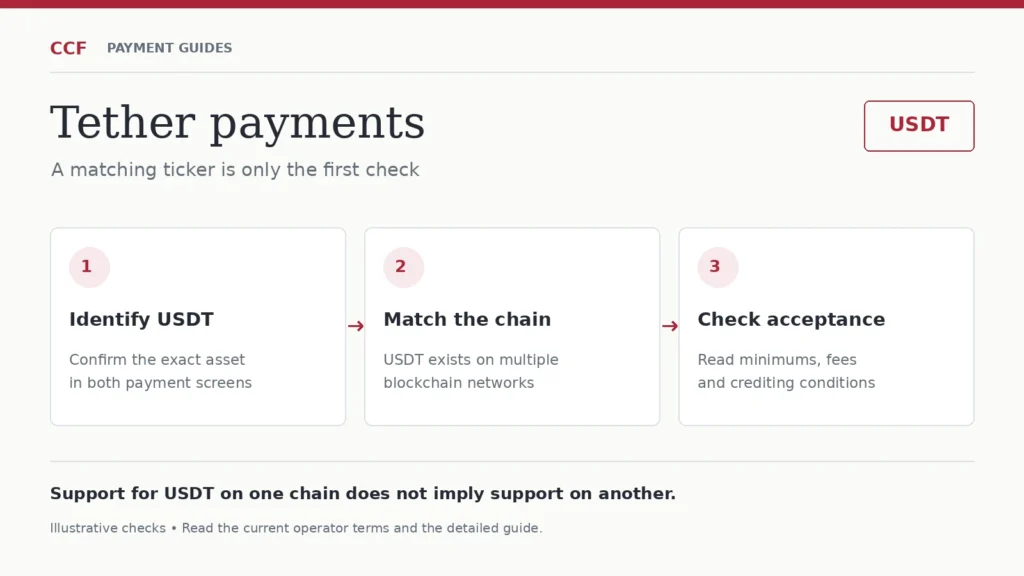
Write the chain name explicitly when recording a route. “ERC20” alone can be a poor substitute for a full instruction, especially when services display several compatible-looking networks or use shorthand inconsistently. A complete comparison should say which asset, which blockchain, which receiving service and which account conditions are involved. If a menu is ambiguous, the research result is unresolved until the operator clarifies it.
Why a matching ticker is insufficient
Imagine a fictional sender offering USDT through Network A while a receiving casino lists USDT through Network B. Both interfaces may display the same token symbol. The mismatch remains. Choosing the lower fee on the sending side does not make the receiving account support that route. A comparison article should never encourage readers to infer compatibility from the token name.
Address appearance is also insufficient evidence. An address is part of the instruction, not the entire instruction. The intended chain, token, destination service and any additional requirement must agree. Rather than publishing a generic address-shape rule, preserve the exact network description from the current cashier. That approach is more useful when interfaces or supported routes change.
A five-field route check
- Asset: identify USDT and any issuer or contract detail the receiving service requires.
- Blockchain: match the named network on the sending and receiving sides.
- Destination: use the current address and any additional instruction shown by the official receiving service.
- Amount: distinguish the amount debited from the amount expected to arrive.
- Account conditions: record crediting, minimum and verification requirements separately from the transfer itself.
Keep these fields together in a dated record. A saved address without the associated network description can become misleading later. Likewise, a screenshot of a fee without the asset and chain does not support a reusable comparison. When information is missing, contact the operator through a verified channel rather than treating an old affiliate article as an operational instruction.
Compare quoted charges, not network stereotypes
Network costs vary, and a custodial service can quote its own withdrawal charge. The amount a user sees at an exchange or casino is therefore not necessarily identical to a blockchain’s underlying resource cost. A useful comparison states who quotes the charge and when it was checked. “TRC20 is always cheaper” is too broad to answer a particular account question.
Ethereum documentation explains that gas is paid in ETH. That technical fact should not be converted into a universal instruction that every user must separately acquire ETH before any USDT transfer: a custodial service may handle the transfer and present a different fee arrangement. The correct question is how the specific sending service funds and quotes the transaction.
Consider a hypothetical sender quoting 1.5 USDT for one supported route and 3 USDT for another. If both routes are genuinely accepted and all other conditions are equal, the first quote is numerically lower at that moment. The comparison still needs minimums, the receiving amount and any account conversion. It cannot establish a permanent ranking of networks or a promise about future charges.
Minimum deposits can be measured differently
A minimum may apply to each individual transfer rather than the combined value of several small transfers. A service can also describe a minimum amount received instead of a minimum amount sent. These distinctions should be visible in an operator profile. Otherwise a reader may assume that two undersized transfers will be combined or that a deduction cannot push the received amount below the threshold.
Use a fictional example: a receiving account requires 20 USDT to arrive in one transaction. If the sender deducts a 1-USDT fee from an entered 20-USDT amount, only 19 arrives under that particular fee model. If the fee is added separately, the recipient may receive the full 20. The same displayed transfer amount has different implications depending on the sender’s quote.
This is a reason to clarify conditions before committing funds, not a suggestion to increase a deposit. If a route is unclear or a minimum does not fit a person’s circumstances, choosing not to use it is a complete decision. A payment comparison should make that option easy to understand.
Deposit availability does not prove withdrawal availability
Check both directions independently. A cashier may offer a deposit route whose withdrawal rules differ, or it may require a withdrawal through a particular method. The account’s terms can also impose verification or payment-ownership requirements. A single “USDT accepted” badge does not describe this complete lifecycle.
A useful operator record has separate fields for deposit networks, withdrawal networks, minimum withdrawal, deduction method and any conversion inside the account. If the only public evidence is a deposit page, label the withdrawal route unconfirmed. Do not extend the deposit evidence to a stronger claim simply to complete a table.
| Question | Record for each route |
|---|---|
| What leaves the sender? | Token, chain, amount and quoted debit |
| What must arrive? | Destination requirements and minimum per transfer |
| What is credited? | Account unit, conversion and crediting condition |
| What can be withdrawn? | Asset, route, minimum and applicable account checks |
| What remains unknown? | Missing fields and the source needed to resolve them |
Track the whole payment timeline
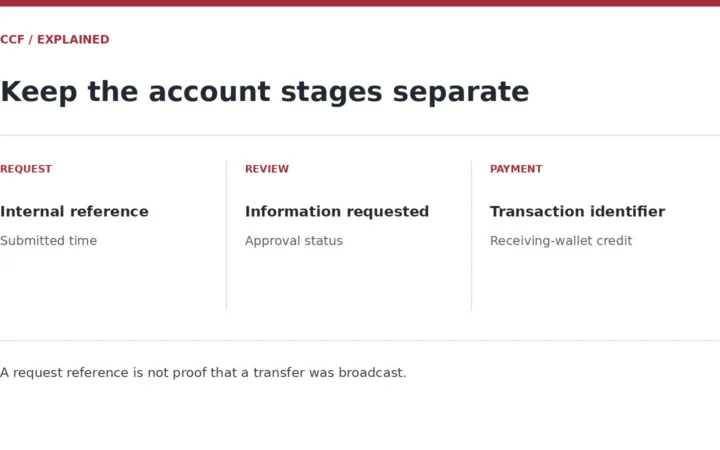
A transfer’s appearance on the correct network is only one event. The receiving service may require a particular confirmation state or a separate account review before crediting it. Similarly, an approved withdrawal is not necessarily already broadcast. Record those stages independently when evaluating a speed claim.
For an actual unresolved payment, a factual support record should distinguish the operator’s request reference from the blockchain transaction identifier. Include the asset, chain, amount and approximate timestamps through the official support channel. Never include wallet recovery phrases or private keys. We do not need those secrets to assess a public source or correct an article.
What to do with conflicting instructions
Sometimes a help article, promotional page and cashier appear to disagree. Do not quietly select whichever value makes the comparison more attractive. Record the conflict, identify the source dates and ask for clarification before relying on the route. An account-specific quote may be more relevant to the proposed transaction, but it should not be used to erase a contradictory contractual condition.
For editorial purposes, a useful label is “public guidance; confirm in cashier” when the public document itself says its figures can vary. Another is “not confirmed” when no sufficiently specific source was available. Those labels communicate evidence quality. They do not imply that the service is defective, and they do not justify presenting unknown charges as zero.
Recovery claims deserve caution
If a transfer has already gone through an incompatible route, do not assume that repeating it through another route will repair the first transaction. Preserve the transaction details and contact the legitimate receiving service. The ability to recover assets depends on the actual circumstances and cannot be promised by a comparison article.
Be particularly wary of unsolicited messages claiming that a fee, wallet connection or disclosure of a recovery phrase will unlock funds. A genuine support investigation does not require handing over the secret that controls a personal wallet. Our verification guide explains how to keep account-document questions separate from wallet secrets and promotional claims.
How the casino list relates to this guide
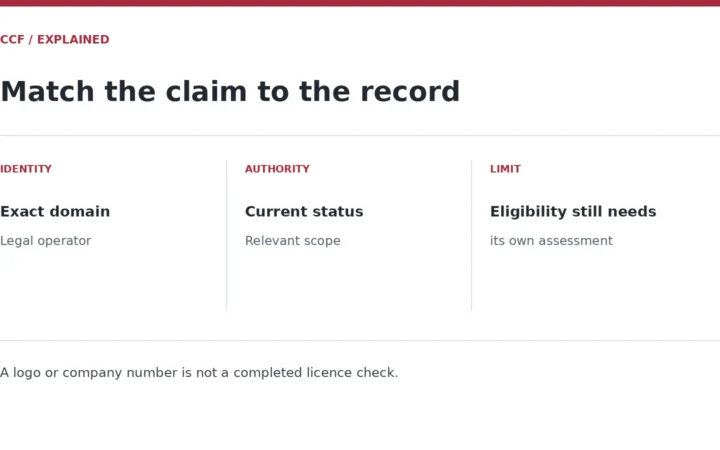
The list is a navigation aid to operator profiles with documented USDT support. It is not a certificate for a particular chain. Read the profile’s sources and then confirm the exact route for your account. Adding a casino to the site’s shared records updates relevant lists, but an editor still needs to verify the evidence attached to a network or payment claim.
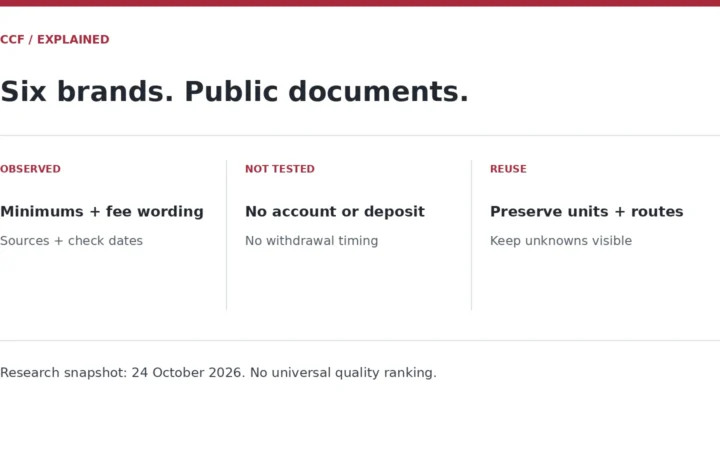
Our payment-terms study compares selected public fields and explains its limitations. It preserves native units and does not turn publication order into a speed or safety score. The distinction matters because a longer list can otherwise look more conclusive than its evidence supports.
Frequently asked network questions
Can I choose a network only because it has the lowest fee?
First establish that the receiving account supports it. Only compatible routes can be meaningfully compared. After that, consider the complete charge, minimums, account rules and any conversion. A cheaper incompatible route is not a valid alternative.
Does “USDT supported” mean every Tether network is supported?
No. The issuer’s network documentation and an operator’s enabled payment methods serve different purposes. The operator needs to identify the particular routes it accepts. Leave other routes unconfirmed unless there is specific current evidence.
Does changing the article’s month verify every fee?
No. The title identifies an edition. Source dates identify actual documentary checks, and a completed transfer would require its own test record. Those labels remain separate so that an automatic title update cannot be mistaken for new payment evidence.
Use the BTC-versus-USDT comparison for account-unit and cost questions. If the conditions remain unclear, do not proceed on the strength of a headline or bonus. Gambling is an expense with the possibility of complete loss; practical limits and independent support are available through our responsible gambling page.
Sources & further reading
- Tether: supported protocols ↗tether.to
- Ethereum.org: gas and fees ↗ethereum.org
Found a factual error or an outdated term? Send a correction
Our editorial standards →