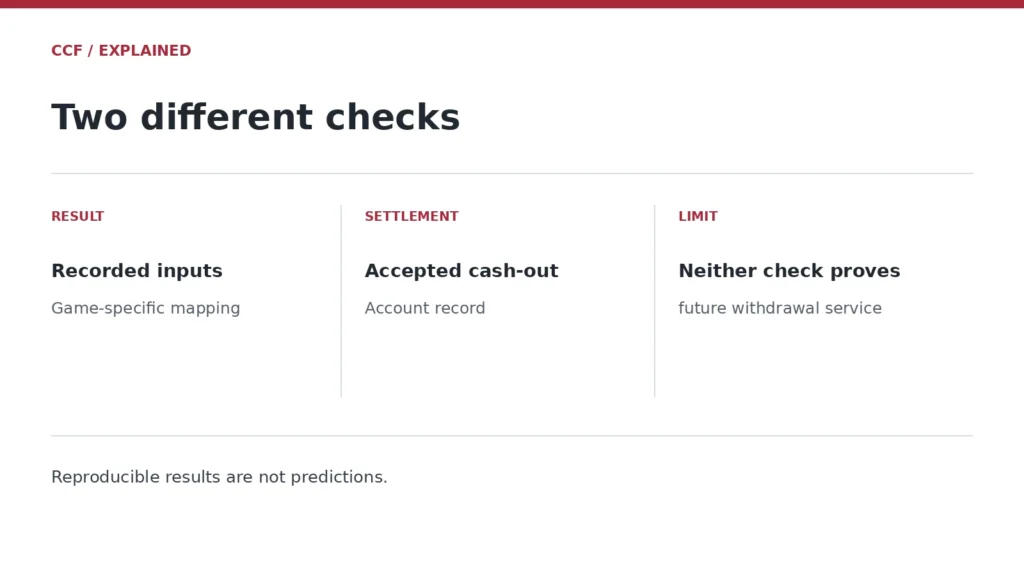
A provably fair crash game should give a reader a specific way to check recorded results. The phrase alone is not the evidence. You need to identify the exact game, the information committed before the relevant round, the information revealed afterward and the rule that maps those inputs to a crash result. You also need to keep result verification separate from cash-out settlement.
This guide provides an evidence checklist rather than a betting system. The casino list accompanying it is filtered for documented crash-game availability. Availability does not mean that every crash title at an operator uses the same verification system. Start with the crypto crash casino guide for the broader comparison and use the following sections to assess a particular provider’s documentation.
Identify the actual game before checking fairness
“Crash” describes a game format, not a universal implementation. Two games with similar multiplier animations can use different providers, input structures, rounding rules and settlement conditions. Record the displayed title, provider, rules version and source URL. If a casino offers several crash games, attach evidence to the relevant title rather than the whole category.
A useful review starts with what can be observed or documented. Does the provider publish a verifier? Does it describe which inputs apply to each round? Can a historical result be linked to those inputs? Is the algorithm explanation specific enough for another person to reproduce the calculation? These questions are more informative than a generic fairness badge.
Commitment, revelation and reproduction
A common verification idea is that some information is committed in advance and revealed later, allowing a reader to check consistency. The precise mechanism varies. Do not assume that a multiplayer crash game uses the same client-seed and nonce arrangement as a single-player original simply because both appear on one website.
Stake’s general implementation documentation describes server seeds, client seeds, nonces and a cursor for the verifiable games it covers. That is an example of published implementation detail, not proof that the same input recipe applies to every crash game. The correct verification path must come from the rules for the specific title and version under investigation.
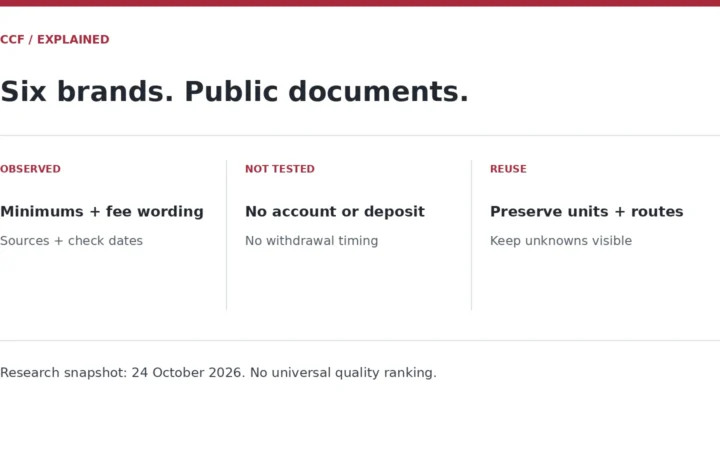
In your research record, separate three statements: the provider describes a mechanism; the required inputs are available for a particular round; and someone actually reproduced that round. The first does not establish the second or third. Our articles should say “documentation reviewed” unless an actual reproducible verification was performed and recorded.
The minimum evidence bundle
| Evidence | Question it answers |
|---|---|
| Game and provider identity | Which implementation is being checked? |
| Round identifier and relevant time | Which historical event does the evidence describe? |
| Pre-round commitment, where applicable | What was fixed or published before the outcome? |
| Revealed inputs | Can the published calculation be reproduced? |
| Mapping and rounding rules | How do inputs become the displayed multiplier? |
| Settlement record | What did the account record for the user’s action? |
A missing element should stay missing in the report. A screenshot of a high multiplier is not a substitute for the input record. A screenshot of a successful verifier result is less useful without the game version and round reference. A strong article lets another reader understand exactly what was checked and which claims remain outside the check.
Verify the mapping, not only a hash
A matching commitment can establish one consistency relationship. The game still needs a documented transformation from the relevant inputs to an outcome. That transformation may include an event-selection rule, a multiplier calculation, rounding, caps or special outcomes. If any of those are omitted, a reproduced intermediate value may not establish the final displayed result.
For an invented example, suppose a verifier produces a raw value that a game’s rules round down to two decimal places. A comparison using ordinary nearest rounding could appear to disagree even if the underlying value matches. The lesson is to record the stated mapping rule. It is not a claim about the rounding used by any particular current crash provider.
Version control matters too. A provider can change its implementation or its documentation. A calculation based on today’s code may not describe an older round. Preserve the date and relevant version information when publishing a test. If the information needed to connect a historical result to a version is unavailable, explain that limit instead of claiming a full audit.
Result verification does not verify a cash-out request
The crash point and a player’s settlement are related but distinct records. A historical result could be reproducible while a separate question remains about when a cash-out request was accepted, what the server recorded or how a disconnection was handled. A useful review needs the settlement rules as well as the fairness explanation.
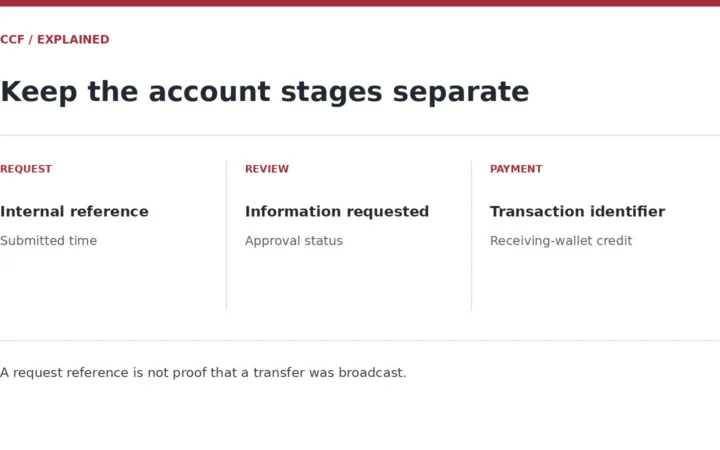
Consider a fictional round that ends at a displayed multiplier of 2.40. A user recalls clicking earlier, but the account record shows no accepted cash-out. Checking the crash point alone cannot resolve the timing dispute. The relevant evidence includes the account’s accepted-action record, the provider’s timing rules and any documented handling of network interruption. An animation or memory of a click is not the complete settlement record.
For that reason, review the distinction between manual and automatic controls, any restrictions on when settings become active and the published procedure for disputed rounds. This article does not recommend a cash-out target. Changing a target affects the structure of outcomes; it does not establish a positive expected return or remove the house advantage.
Read return figures carefully
A theoretical return measure describes a mathematical model over many plays under specified conditions. It does not promise the return from an individual’s session. The UK Gambling Commission’s explanatory material makes the broader distinction between long-run return and a particular playing session. For crash games, the actual title’s rules and implementation are still needed before attaching any numerical return claim.
Do not copy a return percentage from another game with a similar appearance. Also distinguish a payout multiplier from profit. In a simple illustrative settlement where a 10-unit stake returns 20 units in total, the net change from that wager is 10 units before other costs, not 20. Whether a displayed multiplier includes the original stake must be established from the actual game’s rules.
Why past rounds are not a prediction service
A list of previous multipliers is a history display. It does not, by itself, establish information about the next result. A reproducible mechanism can make an already determined result checkable without making future unrevealed inputs available. Claims that a recent sequence guarantees an imminent high multiplier need evidence that ordinary history displays do not provide.
Be wary of paid prediction tools, guaranteed-recovery systems and screenshots selected only for winning outcomes. A useful evaluation would need a complete, independently checkable record, including losses, costs and the precise information available before each prediction. Without that, promotional success examples are not a reliable basis for a mathematical claim.
Compare provider documentation consistently
- Find the rules for the exact crash title, not merely the casino’s general fairness page.
- Record the verification inputs and when each becomes available.
- Identify the algorithm, event mapping and display-rounding rules.
- Check whether the source explains multiplayer rounds or an individual-bet implementation.
- Read cash-out acceptance, interruptions and dispute procedures separately.
- Label the work accurately as source review, reproduced calculation or a broader test.
- State what the check cannot establish, including operator solvency and future withdrawal behaviour.
This comparison can produce a useful result without ranking operators. One provider may publish detailed implementation material while another supplies only a general assurance. That is an evidence difference. It does not justify inventing a numerical safety score or declaring that an untested service is guaranteed to pay.
Connect the game check to the casino account
Game verification is only one part of a casino review. The payment route, verification requirements, bonus restrictions and operator identity still need their own checks. A crypto deposit does not mean the game itself is executed on a blockchain. An on-chain payment record does not demonstrate the fairness of a separate game server.
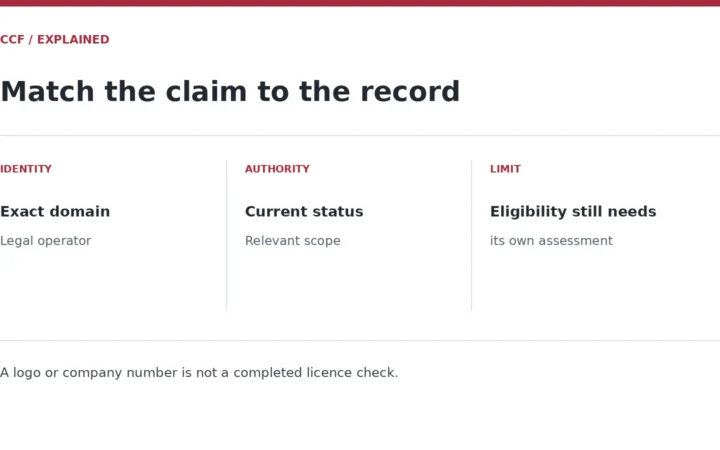
Read the licence and operator identity guide alongside the casino profile. For payment conditions, use the comparison tool. These links cover different questions rather than multiplying claims from a single fairness badge.
Questions about provably fair crash games
Does a successful verification mean a game is profitable?
No. Reproducing a result and evaluating a payout distribution are different tasks. A game can consistently follow a published mechanism while its rules include a house advantage. Verification also does not establish that a user can afford the possible loss.
Can every game at one casino use the same verifier?
Do not assume that. Casinos can carry titles from several providers, each with its own rules and technical design. A general documentation page should only support claims within its stated scope. The exact title and implementation need to be matched.
What should a review say if it has not tested a round?
It should say that the documentation was reviewed and identify the missing test. “We verified every result” would be inaccurate without the relevant records and reproduction work. Clear limits make a comparison more useful than an unexplained assurance.
Keep verification separate from encouragement to play
Understanding a mechanism is not a reason to increase stakes, chase a loss or continue until an imagined pattern appears. Rapid repeated rounds can make spending difficult to track. Decide any limits independently of promotions and stop if the activity no longer fits them. Our responsible gambling page links to support and explains ways to pause.
The month in the headline changes with the edition. The documentary check date and any future test date remain explicit. New source material or an implementation change requires a substantive review; a calendar update alone cannot supply missing verification evidence.
Sources & further reading
- Stake: provably fair implementation; scope is game-specific ↗stake.com
- Stake: game-event mappings ↗stake.com
- UK Gambling Commission: return to player explanation ↗www.gamblingcommission.gov.uk
Found a factual error or an outdated term? Send a correction
Our editorial standards →